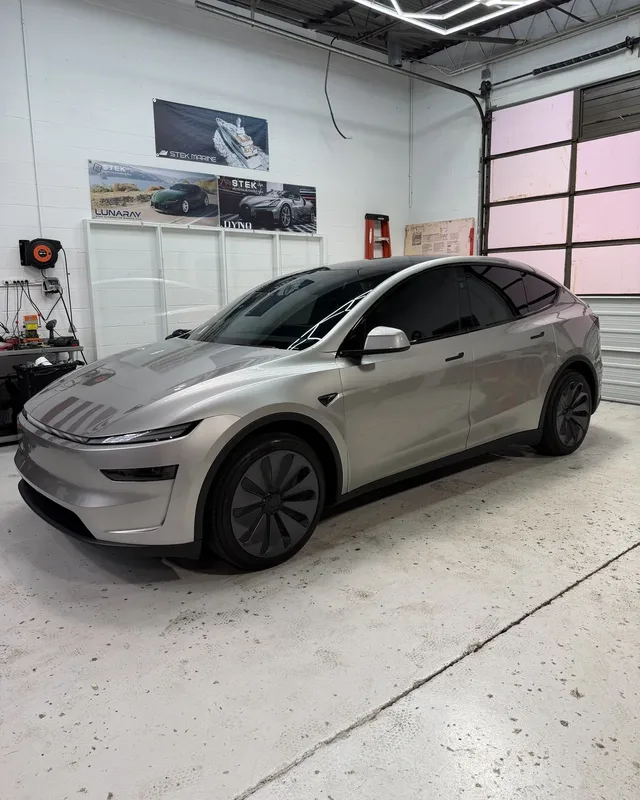
Tesla Model Y L
with STEK SMART+ all around and windshield film
The windshield is the biggest piece of glass on your car and takes the most sun. A light STEK ceramic film can cut heat, UV and glare there without making it dark.
100+ five-star Google reviews“…added tint to the windshield to prevent sun damage to the car and the passengers inside.” — Taylor Bisig, Google review (opens Google Maps in a new tab)Short answer: Kentucky only allows windshield film that keeps light transmittance at 70% or more together with the glass, or a transparent strip along the top above the AS-1 line. So windshield tint is about heat, UV and glare, not darkness. At ProShield, windshield film starts from $200 and a visor strip is $50.
Ceramic and graphene ceramic films target infrared, the heat you feel through the glass on your arms and dash.
STEK lists 99% UV rejection on its windshield-friendly shades, protecting your skin and dashboard.
A visor strip cuts the sun at sunrise and sunset, when it sits right above the road.
Adding a windshield to your tint job?
STEK’s published numbers for its lightest shade, measured on clear glass. Darker windshield shades don’t meet Kentucky’s 70% rule.
| Film | VLT (light let in) | Selective IR rejection | Total solar energy rejected | UV rejection | Glare reduction |
|---|---|---|---|---|---|
| STEK NEX+ 85 | 86% | 56% | 28% | 99% | 5% |
Source: STEK USA published specifications, as listed on our window tint page. VLT is measured with the film on clear glass. Your windshield glass also blocks some light, and Kentucky’s 70% rule counts the film together with the glass, so ask us which option fits your vehicle.
A visor strip (also called a sun strip or eyebrow) is a band of film across the top of the windshield. It takes the edge off low sun on your morning and evening commute. Kentucky allows a transparent strip at the top as long as it doesn’t reach down into the driver’s view below the AS-1 line, which is marked on the edge of most windshields.
Film on the windshield must keep light transmittance at 70% or more with the glass and can’t be red or yellow, or it must be a transparent strip above the AS-1 line. Read the full breakdown in our Kentucky window tint law guide.
Real cars from our Louisville shop with STEK windshield film.
with STEK SMART+ all around and windshield film
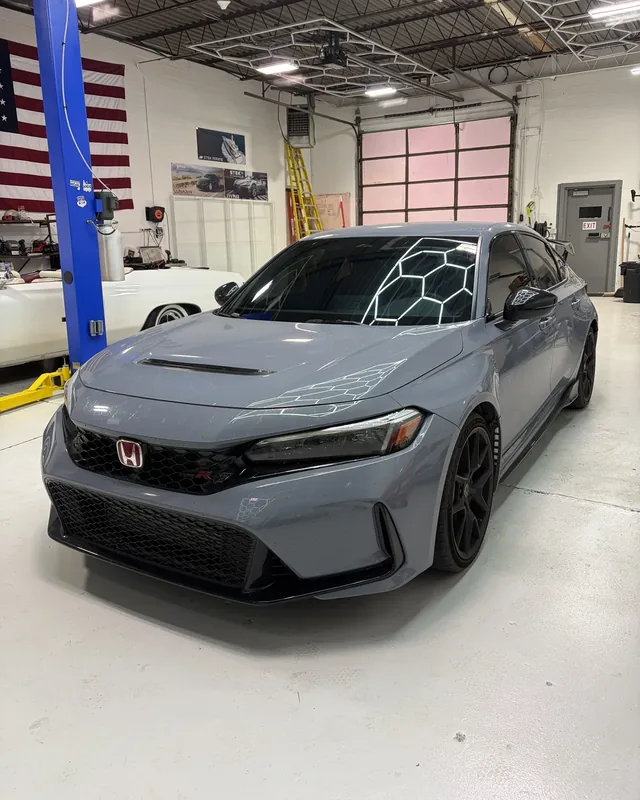
with STEK SMART+ sides and rear, plus windshield film
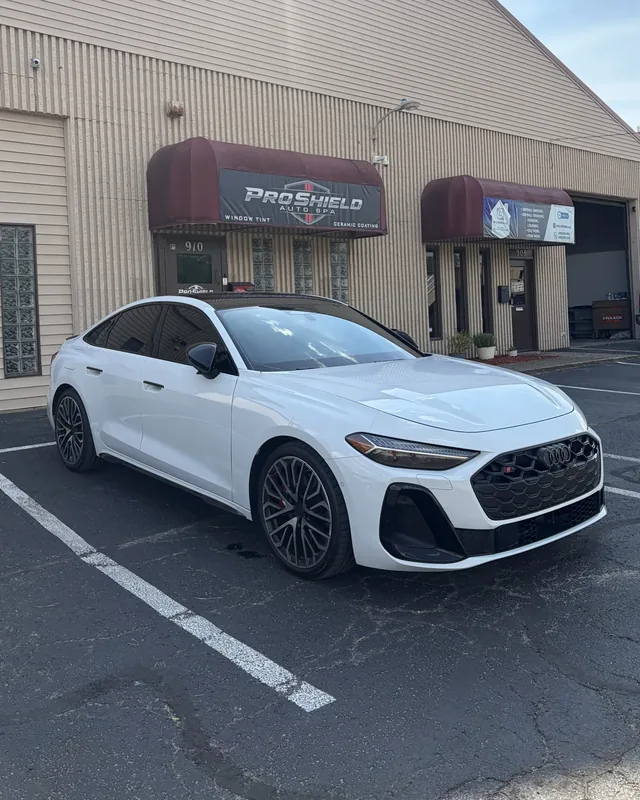
with STEK SMART+ sides and rear, plus windshield film
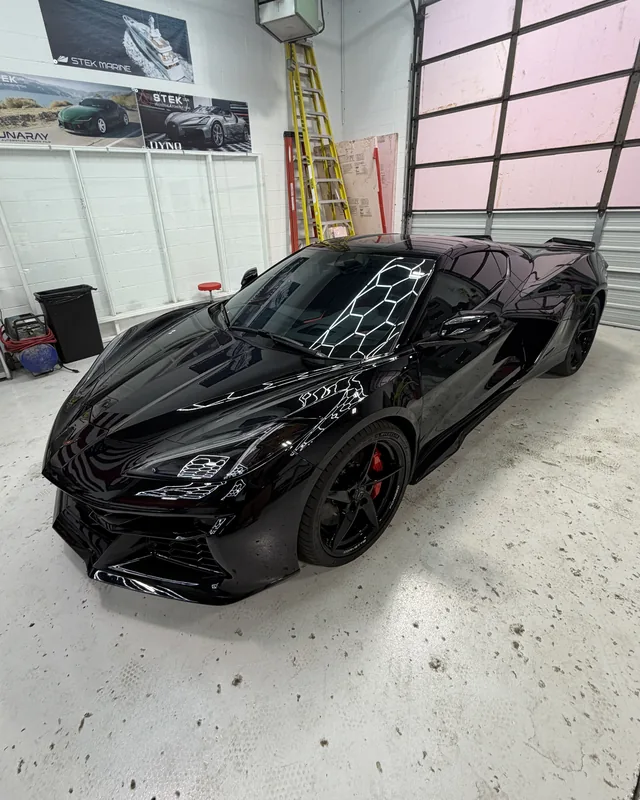
with STEK SMART+ doors and a NEX+ windshield
Yes, within limits. Under KRS 189.110(2), windshield film must have a light transmittance of at least 70% when used with the windshield glass and can’t be red or yellow, or it must be a transparent strip at the top that stays above the AS-1 line. Every percentage has a ±3% tolerance.
At ProShield, windshield film starts from $200, depending on the vehicle and film. A visor strip across the top is $50.
Because light ceramic films still reject a lot of infrared heat. STEK lists 56% selective IR rejection and 99% UV rejection for NEX+ 85, its lightest shade.
Yes. Windshield film and visor strips are add-ons we can do the same visit as your side and rear windows. Ask about them when you book.
Tell us your vehicle. Pick “Windshield / visor strip only”, or add it to a full tint.
Prefer to talk? Call ProShield or text us · Mon–Sat 9 AM–5 PM, by appointment.